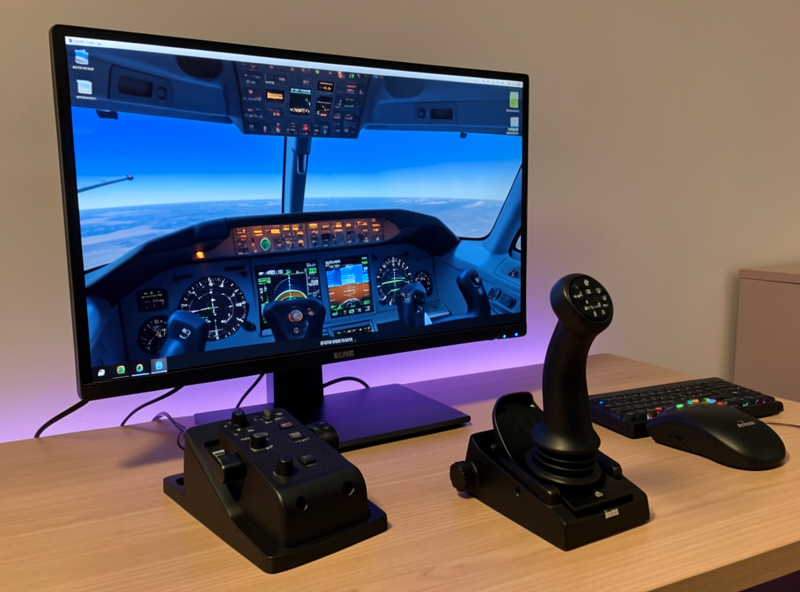
People are genuinely surprised the first time they realise an Airbus airliner is flown with a little sidestick off to the side, not a big yoke or a control column. It looks almost casual next to the two-handed yoke of a Boeing. But that sidestick isn’t a cost-cutting shortcut — it’s the deliberate output of how the aircraft thinks, and once you understand fly-by-wire, the sidestick stops looking strange and starts looking inevitable. On my deck I fly the Airbus with a stick precisely because that’s what the real aircraft uses, and the logic is worth understanding before you decide which controller to buy for airliner flying.
This is also the spoke that breaks the simple “yoke is more serious” assumption. For an Airbus, a stick isn’t a compromise — it’s the correct, authentic input. For a Boeing, the yoke is correct. Airliners are not one category for controller purposes, and the split runs right down the Boeing-versus-Airbus line.
The Core Difference: Cable Logic vs Fly-by-Wire Logic
A traditional Boeing-style airliner, like a traditional GA aircraft, connects your controls more directly to the surfaces — you’re commanding a control deflection, and a big yoke with long travel makes sense for that. You move the column, the elevator moves, the aircraft responds in proportion. The yoke’s size and travel match a system where you’re effectively pulling against the aerodynamic loads.
An Airbus is fly-by-wire with flight envelope protection, and crucially it uses what’s often described as a rate-command, attitude-hold logic in normal operation. In plain terms: you’re not commanding a control-surface deflection, you’re commanding a rate — a roll rate or a pitch rate — and when you centre the stick, the aircraft holds the attitude you left it in. That changes everything about what the input device should be. You don’t need long travel to pull against loads, because the computer is doing that. You need a precise, small-movement device to command rates. A sidestick is the natural shape for that job.
Why a Yoke Is Actually Wrong Muscle Memory for an Airbus
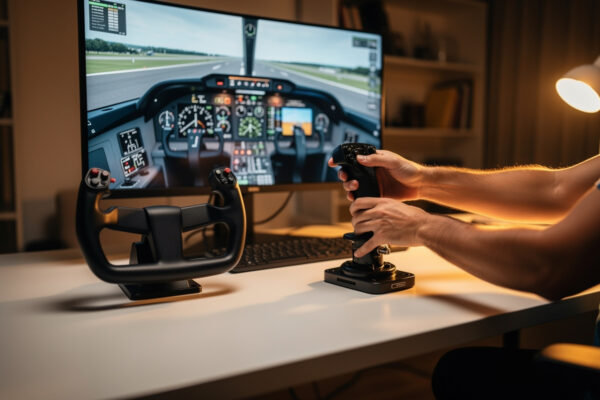
You can map a yoke to an Airbus in the sim, and it’ll fly. But it teaches you the wrong instincts. On a yoke, your hands learn to make larger, two-handed inputs and to hold the column against pressure. On an Airbus sidestick, the correct technique is small, brief inputs — nudge the rate you want, then centre and let the aircraft hold it. The “set it and let go” discipline is fundamental to flying an Airbus well, and a big yoke quietly encourages the opposite: continuous, large, hands-on inputs that fight the aircraft’s own logic.
This is why I keep a stick on the deck for Airbus flying even though I do most of my GA work on a yoke. It’s the same reason a yoke is right for the Cessna — covered in my GA yoke argument — flipped on its head. Match the controller to how the aircraft is actually commanded, and your hands learn the right habits. Mismatch it and you’re building muscle memory you’ll have to unlearn.
The Boeing Exception: Airliners Aren’t One Category
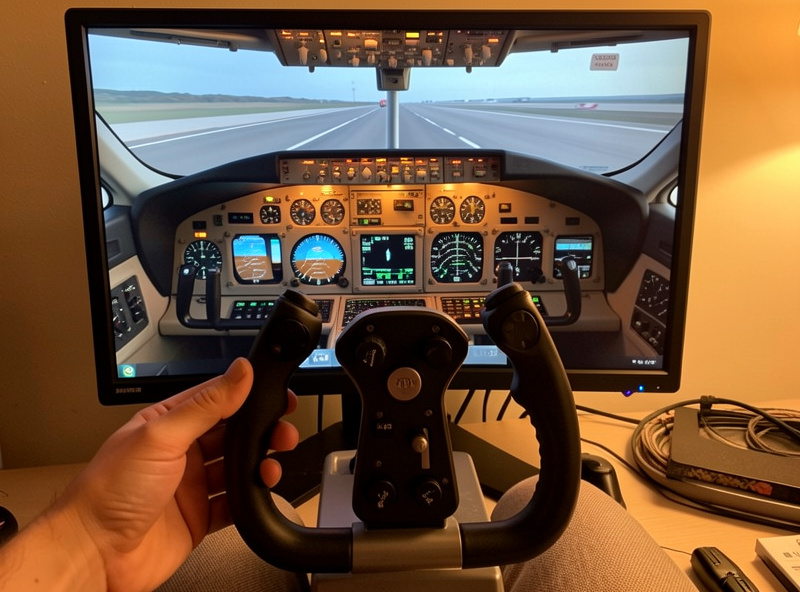
Here’s where simmers oversimplify. “Airliners use a stick” is wrong — Airbus airliners use a sidestick. Boeing airliners use a yoke and column, because Boeing kept conventional control feel even into their fly-by-wire designs. So if your airliner flying is mostly Boeing — the 737, the 747, the 777 — a yoke is the authentic match, not a stick. If it’s mostly Airbus, a stick is correct.
This matters for your purchase. Don’t buy a stick “because airliners” if you’re a 737 person; you’d be mismatching your main aircraft. The clean way to decide is in my yoke vs stick guide, but the airliner-specific rule is simple enough to state here: Airbus means stick, Boeing means yoke.
Airliner Controller Logic at a Glance
The decision boiled down to the airframe you actually fly.
| Airliner you fly most | Real input | Buy this | Why |
|---|---|---|---|
| Airbus A320 family | Sidestick | Stick | Rate-command fly-by-wire; small precise inputs |
| Airbus widebody (A330/A350) | Sidestick | Stick | Same fly-by-wire logic and technique |
| Boeing 737 | Yoke / column | Yoke | Conventional control feel; long travel matches |
| Boeing 747 / 777 | Yoke / column | Yoke | Column input even with fly-by-wire |
| A real mix of both | — | Pick your majority | Match your most-flown airframe |
What the Sidestick Teaches You About Flying the Airbus
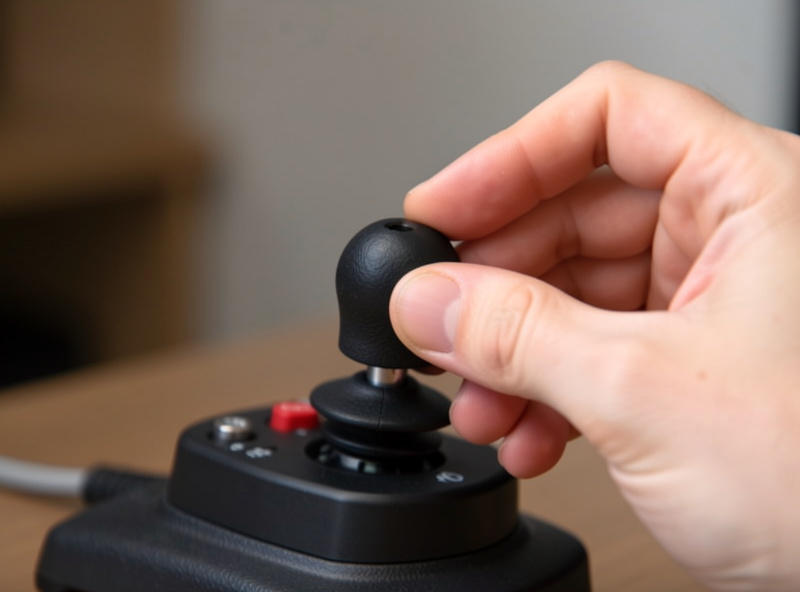
There’s a payoff to using the correct controller beyond authenticity: it makes you fly the aircraft the way it wants to be flown. When I’m on the stick in the Airbus, the small-input, centre-and-hold discipline becomes automatic, and the aircraft feels stable and predictable because I’m working with its logic instead of against it. Simmers who fly the Airbus on a yoke often report it feeling floaty or unpredictable, and a lot of that is the mismatch between a large-travel device and a rate-command system. The hardware is teaching the wrong hands.
If your stick feels twitchy even on the Airbus, that’s usually a curve-and-deadzone issue rather than the wrong tool — small inputs need a calm centre. I won’t duplicate the setup here; the broader tuning approach lives across the cluster. The point for this article is the logic: the Airbus sidestick is the correct input because the aircraft commands rates, and a stick is the device built for that.
The Stick I’d Buy for Airbus Flying
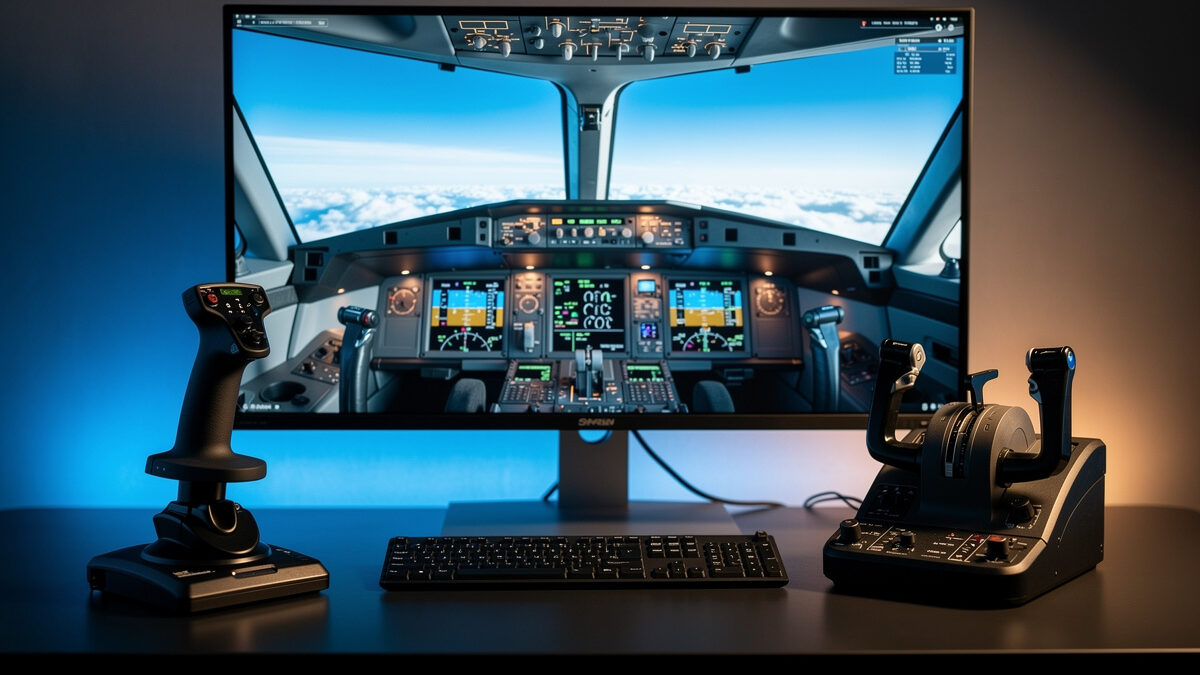
If you’ve decided the Airbus is your home, a stick is the matched purchase. You can browse current flight sim joysticks and HOTAS sets, and pairing one with a separate throttle unit gives you the one-hand-stick, one-hand-throttle layout the Airbus is flown with. As an Amazon Associate I earn from qualifying purchases.
As always on this site, the honest frame: understanding fly-by-wire logic and flying an Airbus well in the sim is a genuinely rewarding skill, but it is sim knowledge, not real-aircraft qualification. The procedures and habits you build here deepen your enjoyment and immersion; they don’t transfer to a real flight deck, which is the province of professional training. Fly the Airbus on a stick because it’s correct and satisfying — and keep the line between sim and certification clear.
Why does the Airbus use a sidestick instead of a yoke?
Because the Airbus is fly-by-wire with rate-command logic. You command a roll or pitch rate, and the aircraft holds attitude when you centre the stick. A small, precise sidestick suits that job; you do not need a yoke’s long travel to pull against loads.
Can you fly an Airbus with a yoke in flight sim?
You can map one, but it teaches the wrong muscle memory. The Airbus wants small, brief inputs then centre-and-hold, while a yoke encourages large continuous inputs that fight the aircraft’s rate-command logic. A stick is the correct controller.
Do all airliners use a stick in flight sim?
No. Only Airbus airliners use a sidestick. Boeing airliners use a yoke and control column with conventional control feel. So a Boeing simmer should buy a yoke, while an Airbus simmer should buy a stick.
What does fly-by-wire change about the controller?
Fly-by-wire means the computer manages control loads and protection, so you command a rate rather than a surface deflection. That removes the need for long travel and favours a small, precise sidestick for commanding pitch and roll rates.
Should I buy a stick or yoke for airliner flying?
It depends on the airliner. For the Airbus A320 family and other Airbus types, buy a stick. For Boeing airliners like the 737 and 747, buy a yoke. Match the controller to the airframe you fly most.
Related Reading
- Yoke vs Stick: The Full Aircraft-by-Aircraft Guide
- Why GA Aircraft Want a Yoke
- Yoke or Stick for MSFS 2024
More from This Cluster
- “The Real Cost of Switching Yoke to Stick Later”
- “Curves and Deadzones: Making Any Flight Sim Controller Disappear”
- “The Helicopter Question: Why a Stick Is Only Part of the Answer”
- “Why GA Aircraft Want a Yoke: The Control-Column Argument”
- “Yoke or Stick for MSFS 2024: The Most Common Wrong Purchase”
- “Yoke vs Stick for Flight Sim: Which to Buy for the Aircraft You Actually Fly”