Switching from a yoke to a stick later costs you a modest resale gap — usually 20-40% of the controller’s price on well-kept gear — plus one curve-tuning session and about a week of feeling clumsy. That’s the whole bill. You don’t relearn flying.
The fear that keeps simmers frozen at the yoke-or-stick fork isn’t really “which is better” — it’s “what if I buy the wrong one and have to switch?” That fear is overblown, and I can say so from experience because I’ve switched in both directions on my own deck. Here’s the honest accounting of what switching actually costs you: what you lose, what transfers, and why the penalty for guessing wrong is far smaller than the paralysis the fear causes. Spoiler: the most expensive mistake isn’t buying the wrong controller. It’s flying with a keyboard for another three months because you were too scared to commit.
The Three Costs of Switching — Ranked
Switching has three real costs, and they’re worth separating because people overestimate the first two and forget the third, which is the one that actually matters.
The first is money, and it’s smaller than you’d think because both yokes and HOTAS sticks hold their value well on the used market. The flight sim hobby keeps drawing in new entrants, and there’s steady demand for second-hand controllers. When I’ve sold a controller I was moving on from — boxed, with the desk clamp and cable — I recovered a solid chunk of what I paid; on clean gear that resale gap usually lands around 20-40% of the original price, not 100%. You’re not throwing away the cost of the wrong controller. You’re eating the difference between what you paid and what you resell for, and on the entry yokes and sticks most people start with, that gap is often the price of a single payware aircraft.
Two things protect that resale value, and they’re worth doing from day one: keep the original box, and don’t drown the controller in adhesive labels or non-reversible mods. A clean unit with the packaging sells fast and near the top of the range. A scuffed one with sticky residue on the throttle detent sits unsold for weeks and goes for less. The “cost of switching” people fear is really the cost of selling badly — and that’s avoidable.
The second is muscle memory, and this transfers more than the forums claim. The genuinely hard-won skills — rudder coordination, throttle management, trim discipline, your instrument scan, your radio and procedure habits — are completely independent of whether your pitch-and-roll hand holds a yoke or a stick. You don’t relearn flying. You relearn one hand’s feel, which is the easy part.
The Cost That Actually Matters: Re-Tuning and a Clumsy Week
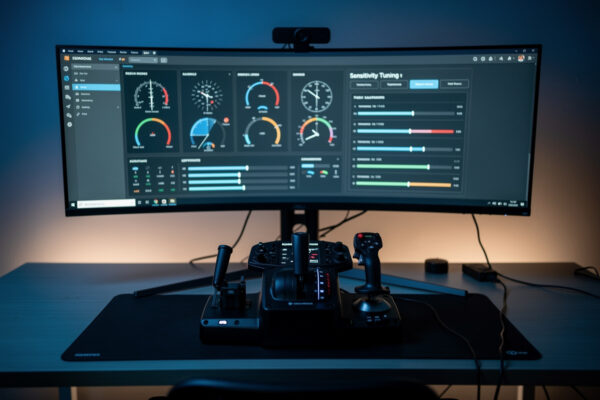
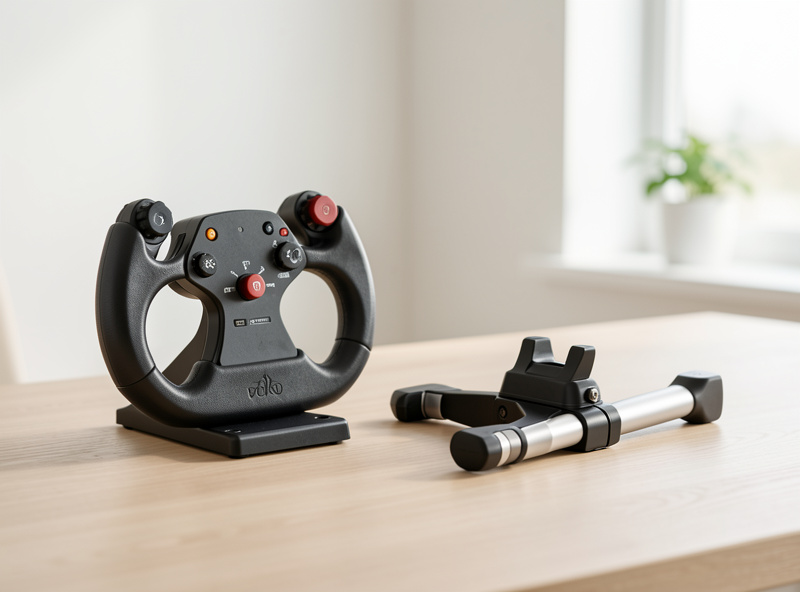
The third cost is the real one: re-tuning your curves and deadzones, plus about a week of feeling clumsy. When you move from a yoke to a stick, the stick will feel twitchy until you set a sensitivity curve, because a stick’s short throw is hair-trigger near centre where a yoke’s long throw was naturally calm. That’s a known, fixable thing — it’s the same tuning I describe in my curves and deadzones guide — but it takes a session or two to dial in, and until you do, you’ll think you made a mistake. You didn’t. You’re just untuned and unpracticed on the new feel.
The fix is fast once you stop fighting it. Going yoke-to-stick, my first move is to add a gentle sensitivity curve on pitch and roll — a mild S-curve that softens the response near centre while keeping full authority at the edges — and a small deadzone of a couple of percent to kill the centre jitter a stick has and a yoke doesn’t. That single change turns a “twitchy, I made a mistake” stick into a “this is fine” stick in one sitting. Don’t add expo until you’ve flown the linear-but-deadzoned setup for a session, or you’ll over-correct the over-correction.
Give it a week of normal flying after that. Your hand recalibrates, your curve settles, and the new controller disappears into the flying the way the old one did. The clumsy week is real and it’s the honest cost of switching — but it’s a week, not a permanent setback, and it ends.
One practical tip to shorten that week: don’t change everything at once. Keep flying the aircraft you already know on the new controller, rather than switching aircraft and controller together. If you’ve been flying the 172 on a yoke and you move to a stick, stay in the 172 while your hand adapts — same aircraft, new feel — so you’re only learning one new thing. Once the stick feels natural on familiar ground, then go explore the aircraft the stick suits better. Stacking the controller change on top of an unfamiliar aircraft is how people convince themselves they made a mistake; isolate the variable and the adaptation is quick.
Which Direction Is Harder?
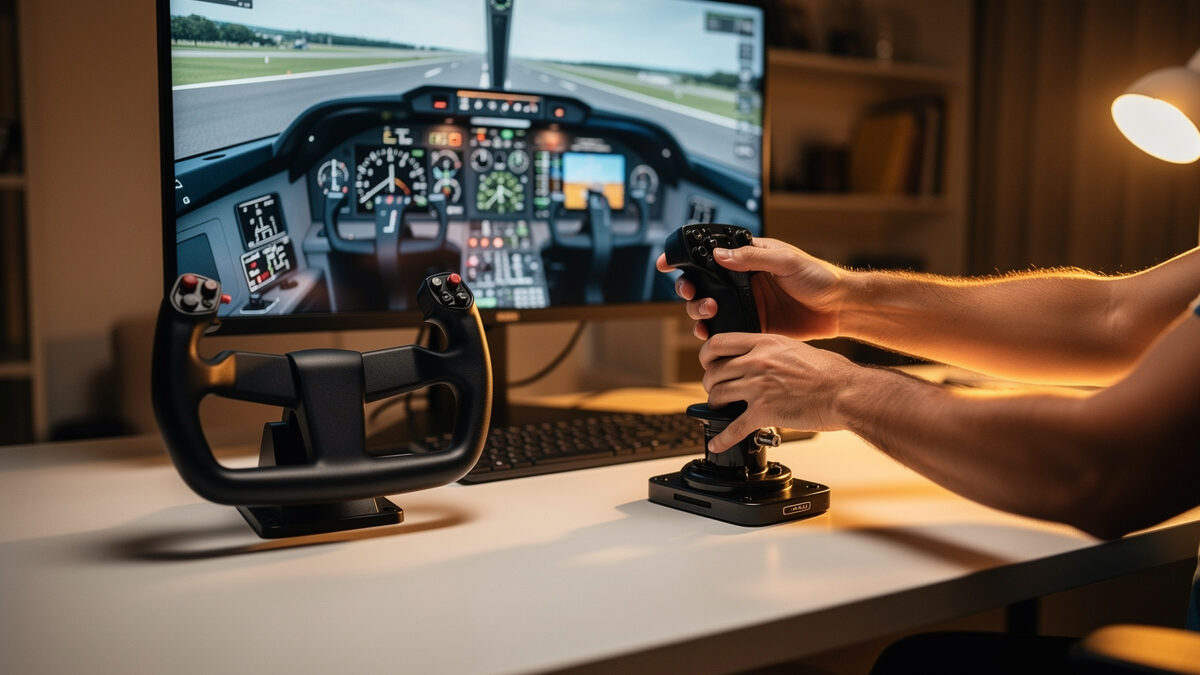
The two directions aren’t symmetrical. Going from a stick to a yoke is usually the easier switch — a yoke’s long travel is forgiving and natural, and most people adapt quickly, especially for GA flying. Going from a yoke to a stick feels harder at first because of the twitch, but it’s entirely a tuning-and-practice problem; once your curve is set, the stick is fine. Neither direction is genuinely difficult. The yoke-to-stick move just front-loads the discomfort into that first untuned session, which is why people remember it as harder than it is.
This asymmetry is also why, if you’re truly undecided, a stick is the slightly safer first buy — covered in my yoke vs stick guide. A stick on a GA aircraft merely feels “different” once tuned, while a yoke on a fighter is physically wrong. Buying the stick first keeps more doors open.
What to Keep When You Switch
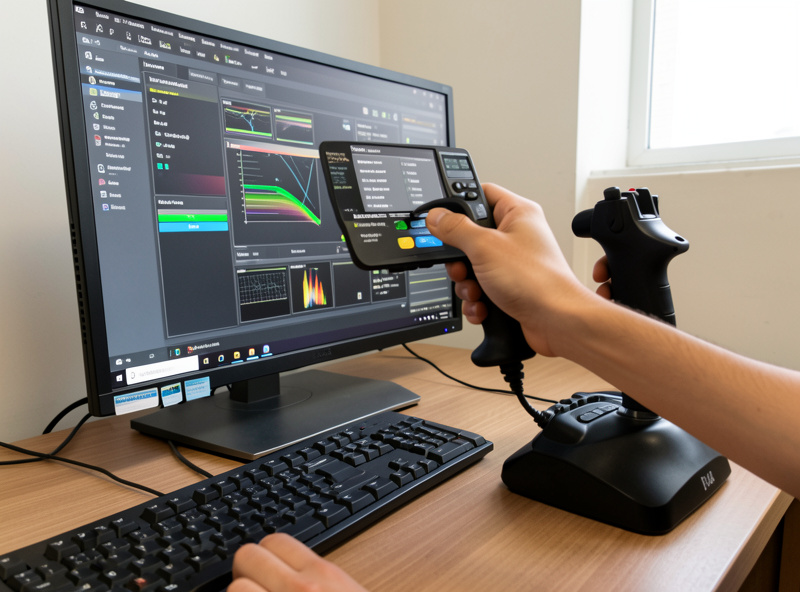
Here’s the good news that makes switching even cheaper: most of your deck doesn’t change. Your rudder pedals, your throttle quadrant, your head tracking, your panels, your mount — all of it carries straight over. You’re swapping one controller, not rebuilding your setup. If you bought into the hobby in the smart order — pedals and immersion gear before agonising over yoke-versus-stick, which is the whole point of my upgrade order doctrine — then switching the pitch-and-roll controller is a small, contained change to one part of a deck that otherwise stays intact.
So the practical advice is: buy for the flying you actually do right now, with confidence. If your hours are in GA, buy the yoke. If they’re in the Airbus or fighters, buy the stick. If you guess wrong later because your flying evolved, the switch costs you a modest resale gap, a tuning session, and a clumsy week — and you keep everything else. That’s a normal hobby step, not a disaster.
If You’re Switching: The Controllers
If you’ve decided to make the move, you can browse current flight sim yokes and HOTAS flight sticks to match your new direction. Sell your old one to a fellow simmer — it’ll find a good home and offset the new purchase. As an Amazon Associate I earn from qualifying purchases.
And the frame I keep on every article here: switching controllers, tuning them, getting good on a yoke or a stick — it’s a satisfying part of the hobby, and it makes you a better sim pilot. It is not flight training, and none of it transfers to a real cockpit, which is the domain of licensed instructors and real aircraft. Switch your controller because your flying changed and the hobby’s better for it — and keep that line clear.
How much does it cost to switch from a yoke to a stick?
Less than people fear. Both yokes and sticks resell well on the used market, so you only eat the gap between what you paid and what you resell for. The real cost is one tuning session and about a week of feeling clumsy on the new feel.
Does switching controllers mean relearning to fly?
No. The hard skills like rudder coordination, throttle management, trim discipline, and your instrument scan are independent of your pitch-and-roll controller. You only relearn one hand’s feel, which settles within about a week of normal flying.
Is it harder to switch from a yoke to a stick or stick to yoke?
Stick to yoke is usually easier because a yoke’s long travel is forgiving. Yoke to stick feels harder at first due to the twitch, but that is entirely a curve-tuning and practice problem that resolves once your sensitivity curve is set.
What do I keep when I switch controllers?
Almost everything. Your rudder pedals, throttle quadrant, head tracking, panels, and mount all carry straight over. You are swapping one controller, not rebuilding your deck, which is what makes switching so much cheaper than it sounds.
Should I worry about buying the wrong controller first?
Not much. Buy for the flying you do now with confidence. If your flying evolves and you switch later, it costs a modest resale gap, a tuning session, and a clumsy week. The bigger mistake is staying on a keyboard out of fear of committing.