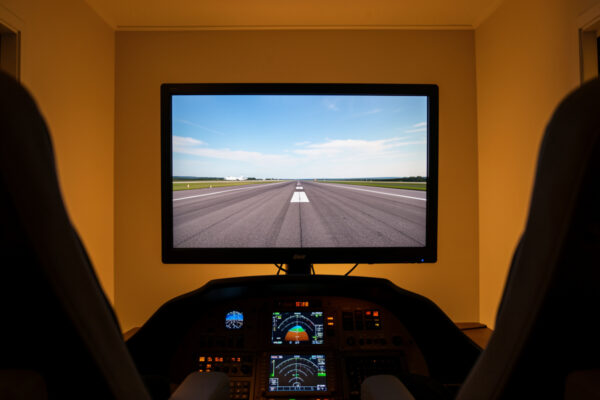
The flight sim chair vs cockpit seat decision comes down to one trade-off most buyers miss: an office chair is built to let you move, a cockpit seat is built to hold you still — and in a sim, holding still is the feature. On my deck, swapping a plush gaming chair for a rigid bucket seat didn’t just feel more like a cockpit; it fixed my sight picture, because my eyeline finally landed in the same place every single flight — and in a sim, even a centimetre of eyeline drift changes where the runway sits in the windscreen on final.
That’s the headline, and it surprises people who assume the cockpit seat is just the cosmetic, look-the-part option. It can be that. But the real argument for it is repeatability and a fixed reference, the same theme that runs through every part of a rig build. This is the honest comparison — where each one genuinely wins, where the cockpit seat is just expensive theatre, and how to decide without wasting money on the wrong throne.
What Each Seat Is Actually For
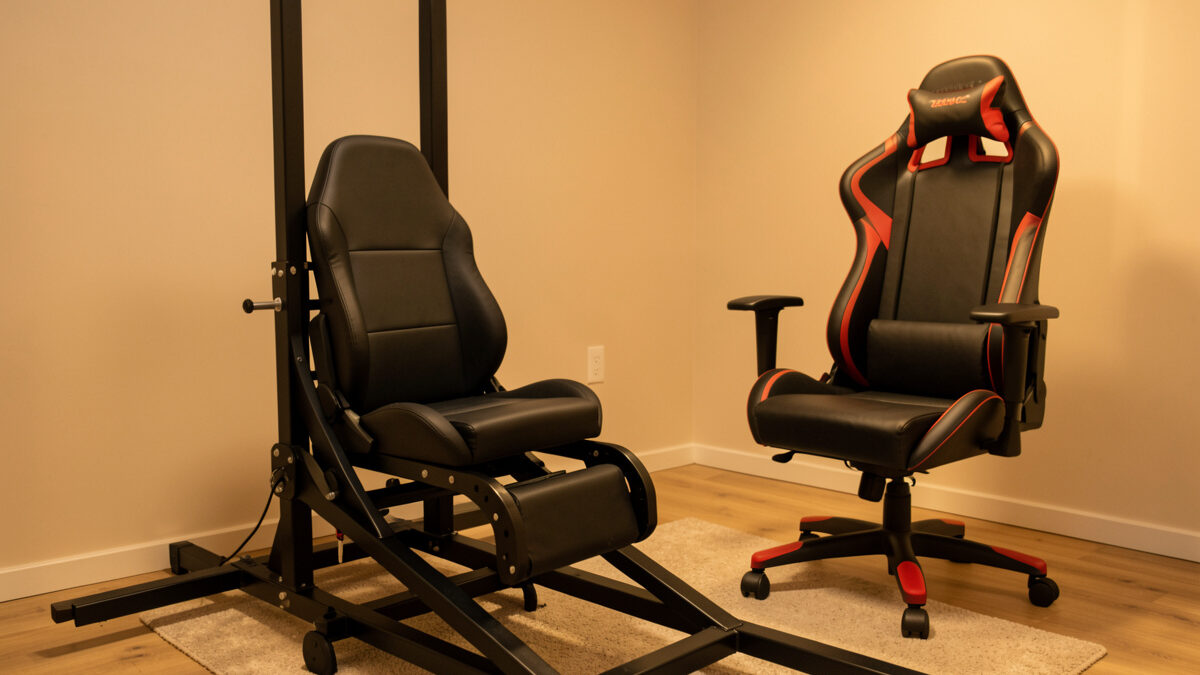
An office or gaming chair is engineered for all-day variety — it reclines, swivels, rolls, and cushions so you can shift position over hours of mixed work. A cockpit seat is engineered for the opposite: a single, fixed, supported flying position that doesn’t change. Neither is “better”; they’re built for different jobs, and the question is which job matches how you fly.
The friction is that the things that make an office chair comfortable for work — soft foam that compresses differently each time you sit, casters that let it roll, a height lever you nudge without thinking — are exactly the things that move your eyeline around in a sim. I lost most of a month early on chasing a sight picture that kept shifting, re-aiming the monitor again and again, before I twigged that the chair gas lever was sinking a few millimetres each session — the seat was the bug, not the screen. A cockpit seat is rigid foam or a hard shell bolted to the frame, so you sit at the same height, the same distance, the same recline every time. That consistency is what your muscle memory and your monitor height both depend on, as the monitor mounting heights guide spells out — the screen height is only right if the seat height is fixed.
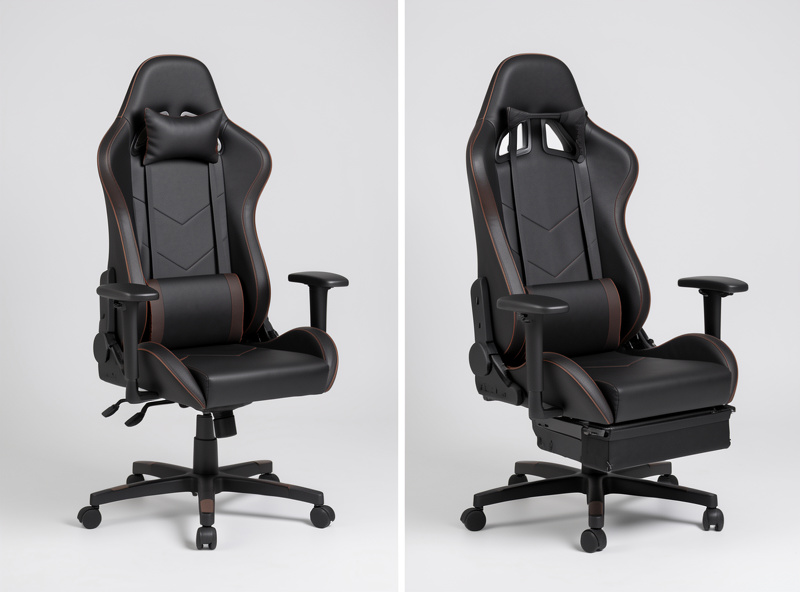
| Factor | Office / gaming chair | Cockpit / bucket seat |
|---|---|---|
| Position repeatability | Drifts (casters, height lever, soft foam) | Fixed every session |
| Long-haul support | Good if high quality; can encourage slouch | Holds an upright flying posture |
| Mounting to rig | Usually sits loose in front of frame | Bolts rigidly into the frame |
| Cost | You may already own one | Added spend; salvaged car seats cheaper |
| Off-sim use | Doubles as a desk chair | Single-purpose |
| Immersion | Functional | Strong, especially with a stick/HOTAS |
When the Office Chair Is the Right Call
If your rig shares a room with your desk or your sim time is occasional, a good office chair is the honest, money-saving choice — there’s no rule that says you need a bucket seat to fly well. A quality chair you already own, parked at a fixed height you agree not to fiddle with, gets you most of the repeatability benefit for nothing. The trick is treating it like a fixed seat: pick a height, mark the post, and stop adjusting it.
The office chair also wins when the rig is dual-purpose. If the same corner is your work-from-home desk and your flight deck, a single good chair beats owning two seats and shuffling them. Plenty of capable simmers fly beautifully from a desk chair their whole hobby — don’t let seat envy push you into spending that’s better aimed at pedals or head tracking, which buy more realism per krona, as the hardware upgrade order lays out. The seat is rarely the upgrade that most improves your flying.
When the Cockpit Seat Earns Its Money
A cockpit seat earns its cost when you fly long sessions, run a stick or HOTAS, or want a permanently fixed flying position bolted into a dedicated rig. Long-haul is where it shines: a rigid seat holds an upright, supported posture for hours, where a soft chair quietly lets you slump until your sight picture and your back both suffer. Three hours into a long-haul on my setup, the rigid seat is the reason I’m still flying comfortably and not fidgeting.
It also matters more with a centre stick or sidestick than with a yoke, because a stick wants you braced and planted to make fine inputs, and a chair that shifts under you fights that. Bolted into the frame, the seat becomes part of the rig’s rigidity rather than a wobble sitting in front of it. A salvaged car bucket seat is the budget route and works brilliantly; a purpose-built sim cockpit bucket seat is the tidy, bolt-in option if you’d rather not hunt a scrapyard. As an Amazon Associate I earn from qualifying purchases.
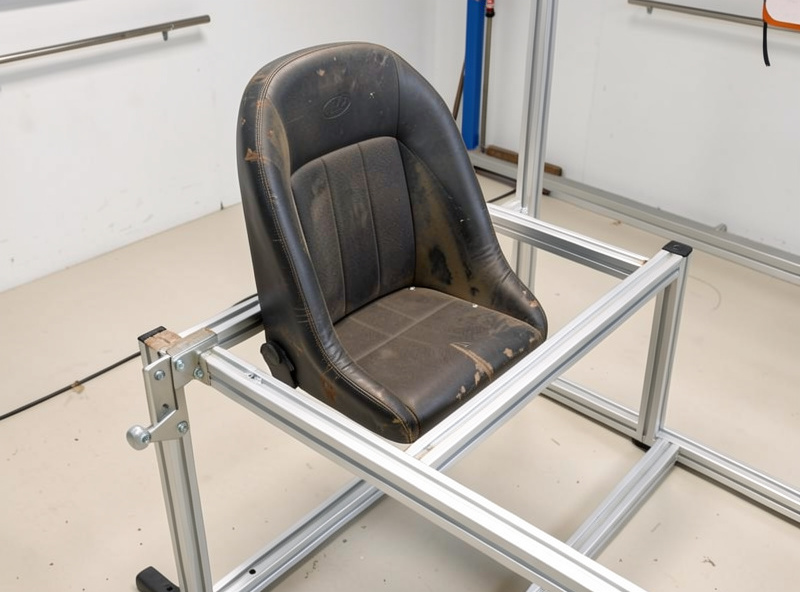
The Budget Middle Ground: A Salvaged Car Seat
A salvaged car seat is the best-value cockpit seat there is — it’s rigid, supportive, designed for hours of seated use, and a breaker’s yard sells them for a fraction of a purpose-built sim seat. This is the route a lot of experienced builders quietly take, because a car seat already solves the hard engineering: bolstering, lumbar shape, durable upholstery, and mounting points. You’re buying decades of automotive ergonomics for the price of a takeaway.
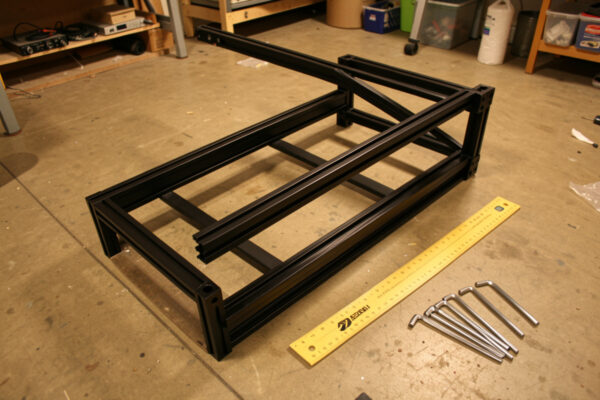
The catch is the mounting. Car seats come with sliding rails meant for a car floor, and you’ll need to adapt those to your aluminium profile frame with a seat bracket or a flat sub-plate — not hard, but it’s the one fabrication step. The rail bolt spacing is usually a standard pattern, and matching it to a sub-plate cut from 8020-style T-slot profile keeps the whole mount adjustable fore-and-aft once it is in. Once it’s bolted in, it’s as solid and repeatable as anything you can buy. If you’re building the frame anyway, designing the seat mount in from the start is far easier than retrofitting, which is exactly why the aluminium profile rig guide puts the seat decision first, before any metal is cut.
How to Actually Decide
Decide by your session length and your controller, not by how it looks in photos — long sessions and a stick point to a cockpit seat, short or mixed-use sessions point to a good chair held at a fixed height. Be honest about how you actually fly. If most of your sim time is a quick circuit after work and the room doubles as an office, the chair is the smart money. If you fly long-haul, run a HOTAS, and have a dedicated rig, the cockpit seat is a real upgrade, not vanity.
Whatever you choose, the non-negotiable is a fixed height. The entire value of the cockpit seat — repeatability — is available from an office chair too, if you simply stop adjusting it. Where the seat sits in the overall build and budget is covered in the desk-to-rig migration guide and priced out in the rig upgrade cost guide. Spend the difference on the seat only if the seat is genuinely your limiting factor — for most people, it isn’t.
Frequently Asked Questions
Is a cockpit seat worth it over a gaming chair for flight sim?
It is worth it for long sessions, stick or HOTAS use, and a dedicated rig, where a rigid seat holds a fixed posture and a repeatable eyeline. For short or mixed-use sessions, a good gaming chair held at a fixed height gives most of the same benefit for no extra spend.
Why does seat choice affect my sight picture?
Because monitor height is set relative to your eye level. A soft chair with a height lever and casters lets your eyeline drift session to session, so the monitor height you dialled in stops being right. A rigid, fixed seat keeps your eyes in the same place every flight.
Can I use a salvaged car seat for a flight sim rig?
Yes, and it is the best-value cockpit seat available. A car seat already provides bolstering, lumbar support and durable upholstery for a fraction of a purpose-built sim seat. The only extra work is adapting its rails to your aluminium profile frame with a bracket or sub-plate.
Does the seat matter more with a stick than a yoke?
Yes. A centre stick or sidestick wants you braced and planted for fine inputs, so a seat that shifts under you fights your control. A yoke is more forgiving. If you run a stick or HOTAS, a rigid seat bolted to the frame makes a noticeable difference to precision.
Can an office chair work for a serious flight sim setup?
Absolutely. Many capable simmers fly from a quality office chair their whole hobby. The key is treating it like a fixed seat: choose a height, mark the post, and stop adjusting it. That recovers most of the repeatability a cockpit seat offers without the extra cost.
Should the seat be bolted to the rig frame?
On a dedicated rig, yes. Bolting the seat into the aluminium profile frame makes it part of the structure’s rigidity rather than a wobble sitting in front of it, and it locks the position permanently. A loose chair in front of a frame loses some of the rig’s benefit.