I will say the thing that gets me argued with on every sim forum: after your first analog controller, your next purchase should be rudder pedals — not a better yoke, not a second monitor, not a throttle quadrant. Pedals. And I am not slightly confident about this; it is the rung of the upgrade order I am most certain of, because the day mine went in was the day my crosswind landings stopped being luck.
Most simmers do the opposite. They buy an entry yoke, fly for a while, and then “upgrade” to a premium yoke — spending real money to refine a feel they already have, while leaving an entire axis of the aircraft unflown. That is buying up a single rung instead of across the ladder, and it is the most common expensive mistake in the hobby. Here is why pedals win.
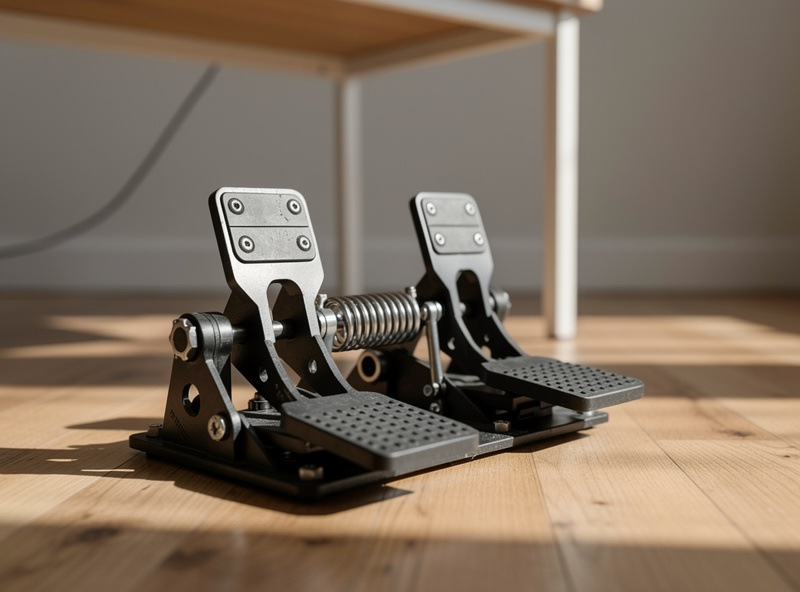
What you are not flying without pedals
Without rudder pedals, the third axis of the aircraft — yaw — is either handled for you or bolted onto a control that should not have it. In most default setups the sim quietly auto-coordinates your turns, flying the rudder so you do not have to. Some people map yaw to a twist grip on the stick, or to keyboard keys. Every one of those is a workaround, and every one of them means you are not actually flying the aeroplane in yaw — the sim is.
That matters more than it sounds, because three of the things that make flying feel like flying live entirely in the rudder:
- Coordinated turns. A real turn is rudder and aileron together; the ball stays centered because your feet keep it there. With auto-coordination off and pedals under your feet, you finally feel the aircraft the way it actually flies, and a slipping or skidding turn becomes something you can sense and fix.
- Crosswind landings. This is the big one. Landing in a crosswind means flying the approach crabbed into the wind and then, in the flare, using rudder to align the nose with the runway while holding wing-down with aileron. You cannot do that without rudder. Without pedals, crosswind landings are a guess; with them, they become a technique you can practice and get good at.
- Ground handling. Taxiing and the takeoff roll are steered with rudder (and nosewheel). Without pedals, taxiing is a comedy of overcorrection. With them, you keep the centerline like you mean it.
There is a fourth thing pedals unlock that single-engine flyers feel immediately: the swing on the takeoff roll. A propeller aircraft wants to yaw as the power comes up — the combination of slipstream over the tail and the propeller’s asymmetric bite pulls the nose to one side, and the only thing that holds the centerline is rudder. On a pedal-less setup the sim hides this from you. The first time you firewall the throttle with pedals connected and have to feed in rudder to stop the nose wandering, the takeoff stops being automatic and becomes a thing you actively fly. That feedback loop — power up, nose swings, foot corrects — is one of those small details that makes a propeller aircraft suddenly feel alive under your hands.
None of those exists for a pedal-less setup. That is not a refinement you are missing — it is a third of the aircraft. A better yoke gives you a nicer version of flying you can already do. Pedals give you flying you literally could not do before. That gap is the entire argument.
The crosswind moment that sold me
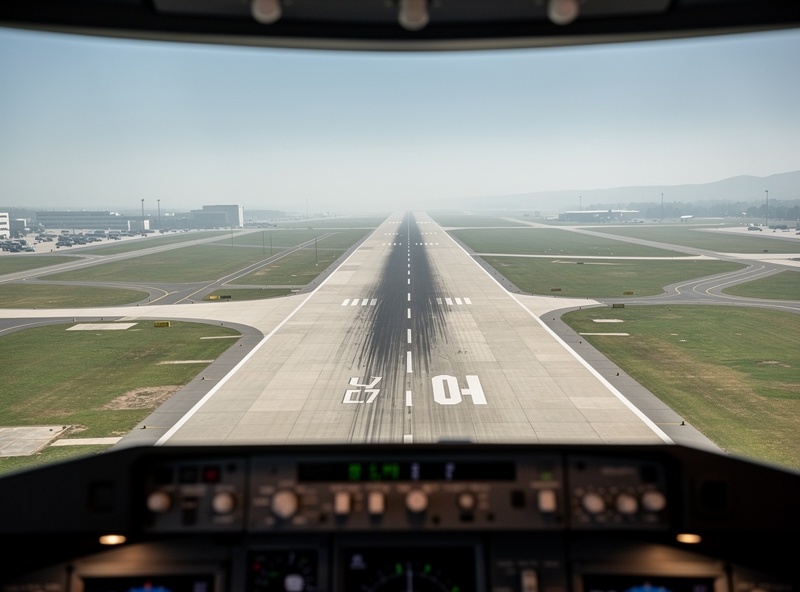
I flew for a long time on a yoke with no pedals, auto-coordination on, telling myself my landings were fine. Then I put in a basic set of spring pedals and turned the assists off, and my first dozen crosswind landings were genuinely worse — because for the first time I was actually flying the rudder and I was bad at it. That is the tell that you have crossed into real flying: it gets harder before it gets better. Within a couple of weeks of evening sessions, holding a Swedish winter crosswind down to the flare went from impossible to satisfying, and there is no premium yoke on earth that buys that. The pedals did. This is exactly the felt-experience case the whole upgrade-order doctrine is built on.
Spring pedals versus load-cell: where the money actually goes
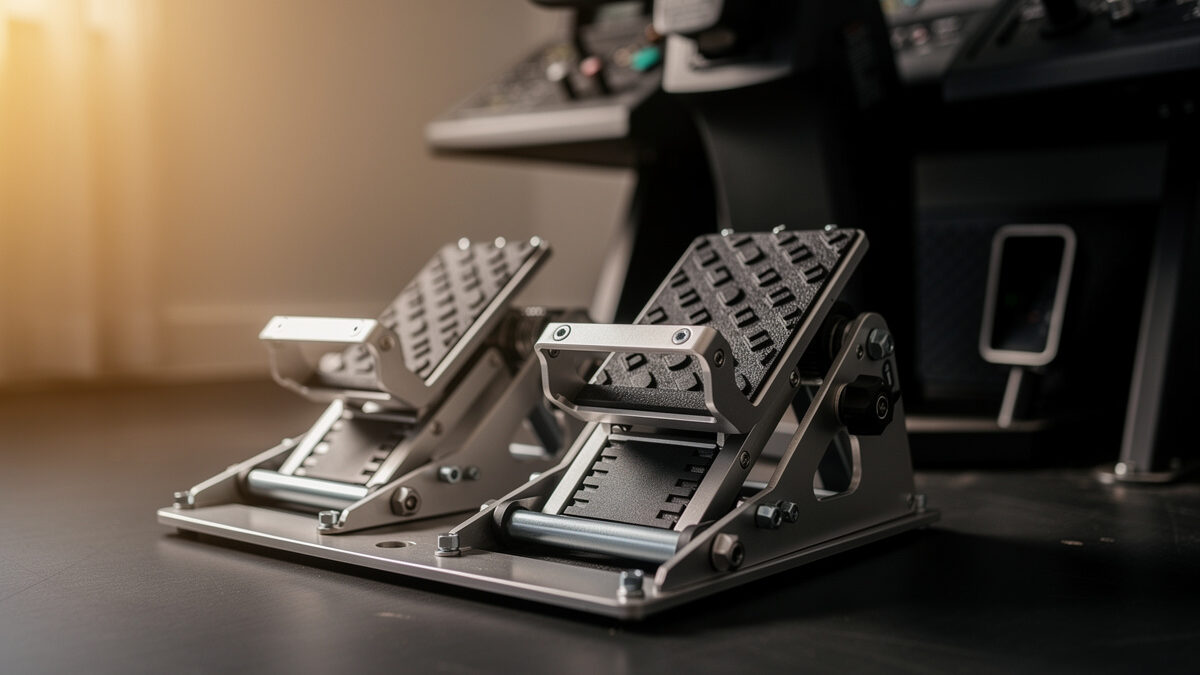
Once you accept that pedals come before a better yoke, the next question is which pedals — and here is where the doctrine repeats itself one level down. Going from no pedals to any pedals is the cliff. Going from cheap spring pedals to expensive load-cell pedals is a gentle, real, but secondary slope.
| Entry spring pedals | Load-cell / premium pedals | |
|---|---|---|
| Yaw control unlocked | Yes — fully | Yes — fully |
| Feel | Lighter, springier, less progressive | Firmer, more progressive, more like resisting an air load |
| Toe brakes | Sometimes | Usually, and better modulated |
| Best for | Every new simmer crossing the cliff | Simmers who already fly rudder well and want refinement |
| Realism-per-krona | Highest in the hobby | Diminishing returns |
I upgraded from entry springs to a load-cell-class set eventually, and the firmer, more progressive feel is genuinely nicer — it loads up under your foot the way a real rudder does against the airflow, which makes fine inputs easier to meter. But it refined a skill the cheap pedals had already taught me. If your budget forces a choice between premium pedals later and basic pedals now, buy the basic pedals now. The cliff is worth more than the polish.
Setting pedals up so they feel right
Two setup notes save people a lot of frustration. First, turn off the auto-rudder and auto-coordination assists — otherwise you have pedals but the sim is still flying them for you, and you get none of the benefit. Second, set a small deadzone around the rudder center so the pedals’ natural slop does not make the aircraft fishtail on the ground, and consider a mild response curve so small foot inputs give small yaw responses. Rudder is an axis you meter in tiny amounts on a normal landing, so a curve that calms the center makes the whole thing feel less nervous. Ten minutes here is the difference between pedals that feel precise and pedals that feel twitchy.
The honest gear note
For crossing the cliff, a set of entry flight sim rudder pedals is the single best realism-per-krona buy you can make after your first controller — this is the class of pedal I started on. If you already fly rudder well and want the firmer, more progressive feel, a set of load-cell rudder pedals is the refinement step. And because pedals slide on a hard floor right when you need them planted, a simple anti-slip mat or floor brace is the cheap accessory that makes any pedals feel twice as good.
Frequently Asked Questions
Are rudder pedals worth it for flight sim?
Yes, and they are worth buying before a better yoke. Pedals unlock yaw — coordinated turns, crosswind landings, and proper ground handling — none of which exist on a pedal-less setup. Going from no pedals to any pedals is the biggest realism-per-krona jump after your first analog controller.
Should I buy rudder pedals before upgrading my yoke?
In almost every case, yes. A better yoke refines flying you can already do; rudder pedals add an entire axis of the aircraft you currently cannot fly. For a new simmer I would take entry pedals over a premium yoke every single time.
Do I need expensive load-cell rudder pedals?
No, not to start. Basic spring pedals unlock yaw completely — that is the realism cliff. Load-cell pedals add a firmer, more progressive feel that helps fine input metering, but it is a refinement of a skill cheap pedals already teach you. Buy basic pedals now over premium pedals later.
Can you do crosswind landings without rudder pedals?
Not properly. A crosswind landing requires crabbing into the wind on approach and using rudder in the flare to align the nose with the runway while holding wing-down aileron. Without pedals you have no rudder to do that with, so crosswind landings stay a guess rather than a technique.
Why does my aircraft fishtail on the ground with new pedals?
Usually the rudder deadzone is too small, so the pedals’ natural center slop steers the nosewheel. Set a small deadzone around rudder center and a mild response curve to calm the center, and turn off any auto-rudder assist so you are actually flying the pedals rather than the sim doing it for you.
Keep Building
- The Flight Sim Hardware Upgrade Order — where pedals sit in the full doctrine.
- First Flight Sim Hardware After the Keyboard — the purchase that comes just before this one.
More from This Cluster
- “The Flight Sim Upgrade Procrastination Trap: When Buying Gear Becomes the Hobby”
- “Flight Sim Hardware Budget: What $200 vs $600 Actually Buys You”
- “Head Tracking: The Best-Value Flight Sim Upgrade Nobody Talks About First”
- “HOTAS vs Yoke: Which Should Be Your First Flight Sim Purchase?”
- “First Flight Sim Hardware After the Keyboard: What to Buy Before Anything Else”
- “The Flight Sim Hardware Upgrade Order: Where Every Krona Buys the Most Realism”