It is the first real fork in the road for a new simmer, and the one that costs the most to get wrong: should your first proper flight controller be a yoke or a HOTAS? Buy the wrong side and you do not just lose money — you spend months flying the wrong control for the aircraft you actually love, and then you buy again. I own both sides, fly both regularly, and the good news is the decision is genuinely answerable. It comes down to one question, and it is not about which is “better.”
The question is: what are you going to fly? Get honest about that and the choice makes itself. Everything else — feel, immersion, button count, price — is downstream of matching the hardware to the aircraft.
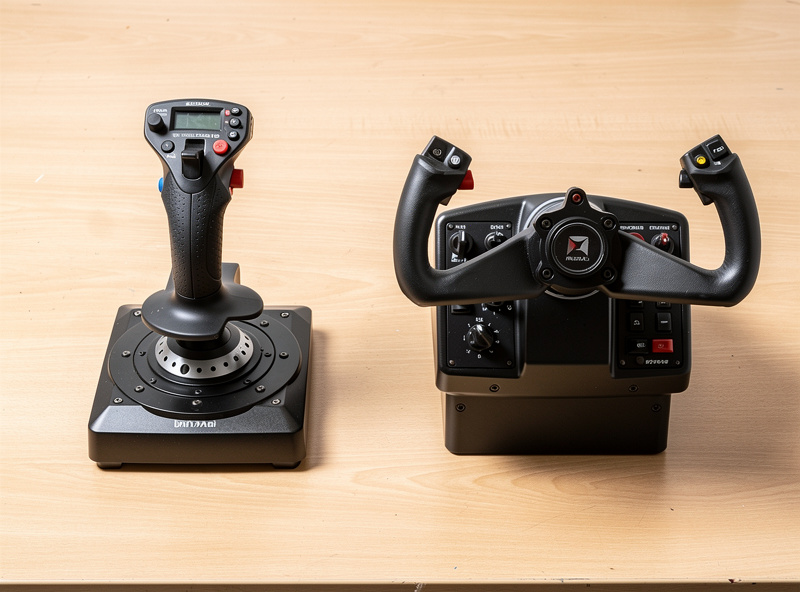
What each control actually is
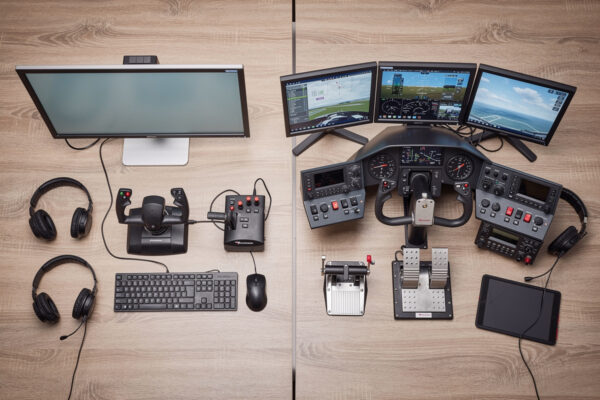
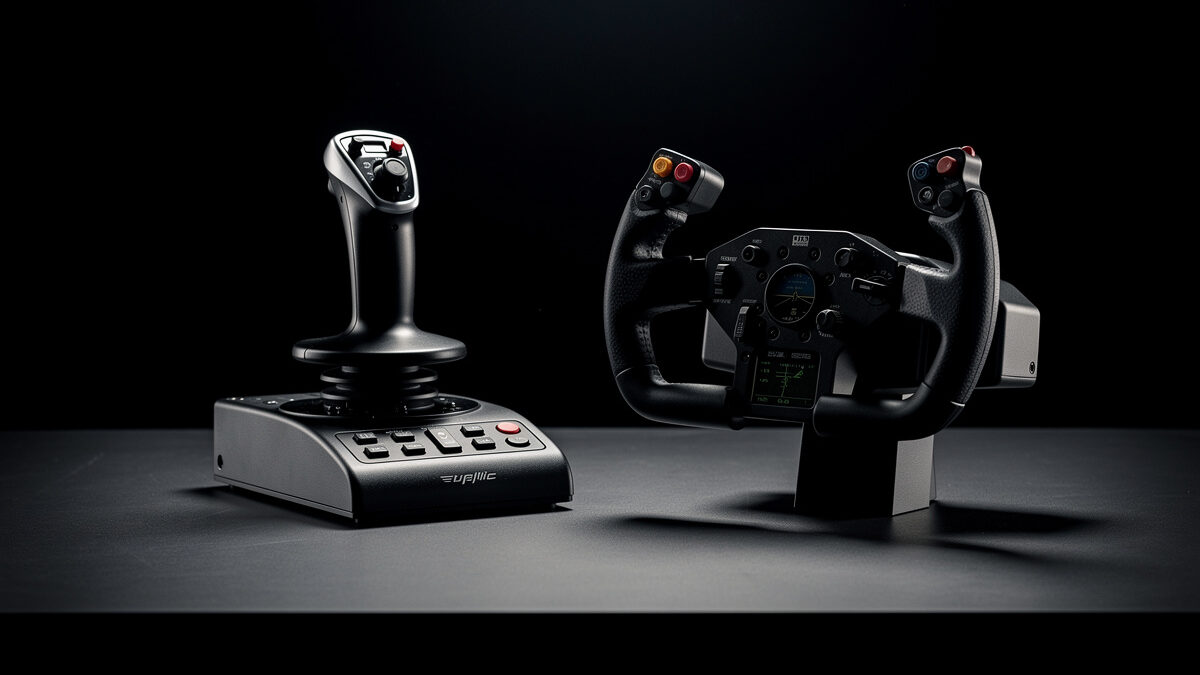
A yoke is the control-column-and-wheel you see in light aircraft, business jets, and airliners: you push and pull for pitch, rotate the wheel for roll. It usually mounts to the desk edge and very often comes with integrated throttle levers, so a single purchase covers pitch, roll, and power. It is the control those aircraft genuinely use.
A HOTAS — Hands On Throttle And Stick — is a joystick paired with a separate throttle unit, the layout of fast jets and many warbirds. The stick handles pitch and roll, the throttle handles power, and both are covered in buttons, hats, and switches so your hands rarely leave them. A plain joystick on its own is the budget entry to this side; the full HOTAS adds the dedicated throttle.
The decision: match the control to the aircraft
Here is the rule, and it is almost the whole article: fly GA and airliners → yoke; fly military and aerobatic → stick or HOTAS. It is that direct because real aircraft use these controls for real reasons, and the sim rewards you for matching them.
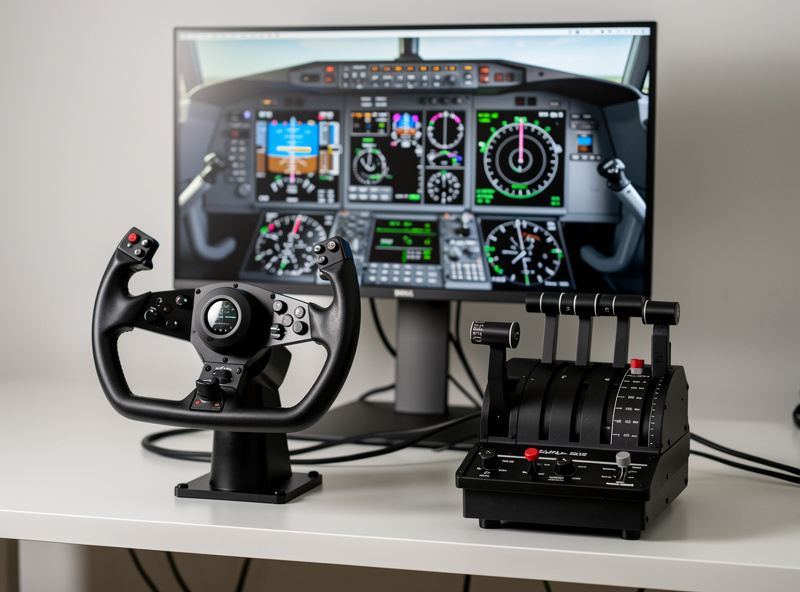
If your fantasy is droning across the country in a Cessna, shooting approaches in a Baron, or flying a tubeliner from gate to gate, a yoke is right for you. The motion matches the aircraft, the integrated throttles get you flying complete, and the precise, two-handed feel of a yoke suits the deliberate, trimmed-out flying those aircraft do. Nobody flies an airliner with a centre stick in their lap (Airbus sidesticks aside — the airliner control logic guide covers why Airbus made that sidestick call), and the yoke’s feel rewards the kind of smooth, small inputs GA and airliner flying are made of. The specific argument for choosing a yoke in real-world GA scenarios is laid out flight-by-flight in the GA aircraft yoke case.
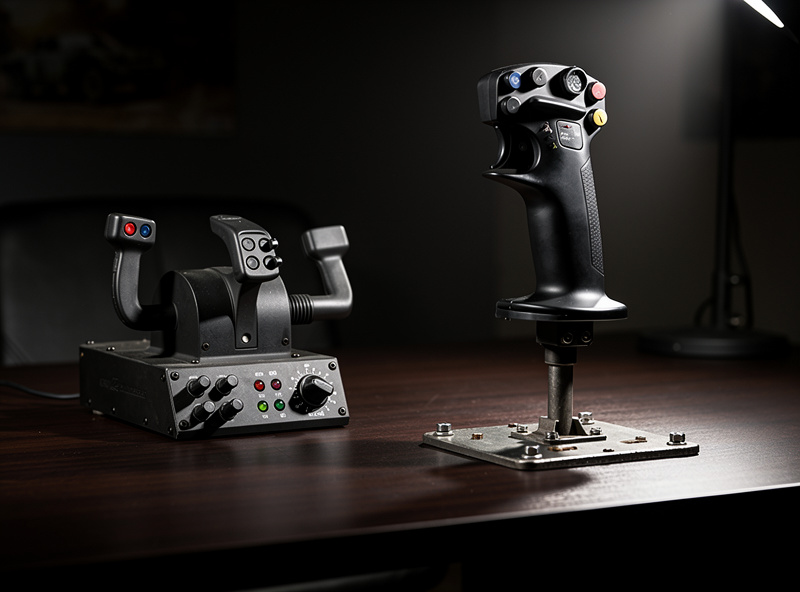
If your fantasy is air combat, warbirds, or throwing an aerobatic type around, a stick or HOTAS is right for you. Fast jets and warbirds use a centre or side stick, the button-dense HOTAS layout lets you run weapons, radar, and trim without reaching for the keyboard, and the stick’s quicker, lighter feel suits aggressive manoeuvring. A yoke in a dogfight feels as wrong as a stick in a 737.
This whole fork is rung zero of the upgrade-order doctrine — the very first decision, made before you spend, precisely because getting it right is what stops you buying twice. If you want the full side-by-side breakdown of both options across MSFS and real-world use, the yoke vs. stick complete guide goes deeper on every scenario.
Side-by-side: yoke vs HOTAS
| Yoke | HOTAS (or stick) | |
|---|---|---|
| Best for | GA, business jets, airliners | Fast jets, warbirds, aerobatics |
| Feel | Deliberate, two-handed, precise for trimmed flight | Quick, light, suited to aggressive manoeuvring |
| Throttle | Often integrated levers | Dedicated throttle unit (full HOTAS) or none (bare stick) |
| Buttons/switches | Modest | Many — hats and switches on stick and throttle |
| Desk footprint | Clamps to desk edge, wide | Stick centre or right, throttle left — flexible |
| Entry cost | One unit covers pitch/roll/power | Bare joystick is cheapest entry; full HOTAS costs more |
The “but I want to fly everything” problem
Plenty of new simmers genuinely do not know what they will fly, or want a bit of all of it. That is real, and the answer is still to pick a primary. Decide which side you will spend the most hours in and buy that, because a yoke will fly a fighter passably and a stick will fly a Cessna passably — they just each feel a little wrong outside their lane. You will not enjoy a 737 on a stick or a Spitfire on a yoke, but you can absolutely dabble across the line on whichever you bought.
Helicopters deserve a word here too, because they break the binary. A helicopter is flown with a cyclic (a stick), a collective (a left-hand lever), and pedals, so the stick side is the closer starting point — but full helicopter immersion really wants a dedicated collective, which is its own purchase down the line. If you suspect rotary flying is your thing, lean toward the stick side and treat the collective as a later, deliberate addition rather than a day-one buy. Do not let the helicopter question paralyze the first decision; a stick gets you flying rotors well enough to find out whether you love it. The full picture of what a dedicated collective actually adds to that immersion — and whether the upgrade is worth pursuing — is in the helicopter collective guide.
What you should not do is buy both at the start to “cover everything.” That is the gear-hoarding instinct the whole upgrade order exists to resist. Buy the side that matches your main interest, fly it for a few months, and if you genuinely find yourself living on the other side of the line, then add the second control as a deliberate, informed purchase. Most simmers never need to — they discover that one side really was their hobby all along.
The cost of switching later
It is worth being clear-eyed about the switch, because it is the thing the decision is really protecting you from. If you buy a yoke, fly for six months, and realize you are a fast-jet person at heart, you have not wasted the yoke — it still flies the GA you will occasionally do — but you now need a HOTAS too, and that is a second full purchase. The same is true in reverse. There is no graceful upgrade path between the two; they are different controls for different flying. That is exactly why the five minutes of honesty up front is worth so much: it is the difference between one purchase and two. If you are genuinely on the fence, start with the cheaper bare joystick — it is the lowest-cost way to find out whether the stick side is for you before committing to a full HOTAS or a yoke.
For GA and airliner flying, an entry yoke with integrated throttles is the complete first buy. For military and aerobatic flying, a HOTAS stick-and-throttle set is the matching control — or, if you are still deciding which side you are, a bare flight sim joystick is the cheapest way to test the stick side before you commit.
Frequently Asked Questions
Should my first flight sim controller be a yoke or a HOTAS?
Match it to what you fly. Choose a yoke for general aviation, business jets, and airliners; choose a stick or HOTAS for fast jets, warbirds, and aerobatics. It is not a question of which is better but of which control the aircraft you will actually fly most actually uses.
Can one controller fly both airliners and fighters?
Passably, but not happily. A yoke will fly a fighter and a stick will fly a Cessna, but each feels wrong outside its lane. Pick the side you will spend the most hours in and buy that as your primary, rather than buying both at the start.
What is the cheapest way to start if I am undecided?
A bare flight sim joystick is the lowest-cost entry. It covers pitch, roll, and twist-rudder, and it lets you find out whether the stick side suits you before committing to a full HOTAS or a yoke. If you already know you want GA or airliners, skip it and buy a yoke.
How costly is it to switch from a yoke to a HOTAS later?
It is effectively a second full purchase, because there is no upgrade path between them — they are different controls for different flying. Your original control is not wasted, but you do end up owning both. That is why a few minutes of honesty about what you will fly is worth real money up front.
Does the Airbus sidestick change the yoke-versus-stick choice?
Airbus airliners use a sidestick rather than a yoke, so they sit slightly between the two camps. But if your main interest is airliners and GA generally, a yoke is still the better all-round primary, since most of that fleet uses a control column and yokes bring integrated throttles.
Related Guides
- The Flight Sim Hardware Upgrade Order — where this choice fits in the full sequence.
- First Flight Sim Hardware After the Keyboard — the bigger first-purchase picture.
- Rudder Pedals Before a Better Yoke — your next purchase whichever side you chose.
More from This Cluster
- “The Flight Sim Upgrade Procrastination Trap: When Buying Gear Becomes the Hobby”
- “Flight Sim Hardware Budget: What $200 vs $600 Actually Buys You”
- “Head Tracking: The Best-Value Flight Sim Upgrade Nobody Talks About First”
- “First Flight Sim Hardware After the Keyboard: What to Buy Before Anything Else”
- “Rudder Pedals Before a Better Yoke: The Upgrade Most Simmers Get Backwards”
- “The Flight Sim Hardware Upgrade Order: Where Every Krona Buys the Most Realism”